
TEAM STORIES
H.S.
Department:Director of the Aeronautics Development Department
Year Joined:2025
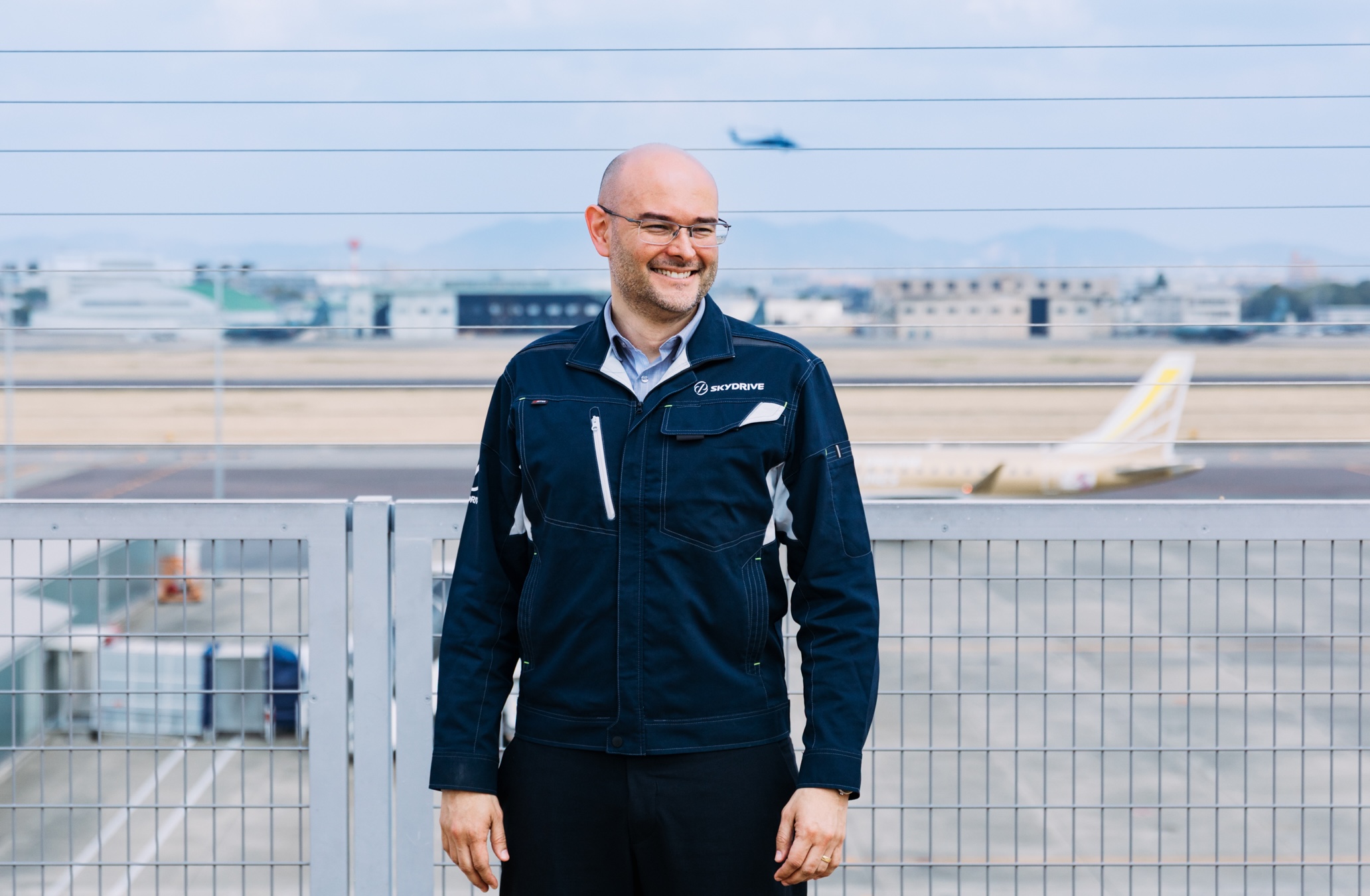
H.S. Interview
Profile
H.S. is Director of the Aeronautics Development Department at SkyDrive, bringing over a decade of experience across automotive and aerospace engineering. His career spans quality and process control, subsystem validation, product design, and advanced aeronautical R&D — a trajectory that has taken him from the factory floors of automotive and aerospace giants to the cutting edge of eVTOL development in Japan.
H.S. began his career as an intern at PSA Peugeot Citroën, working in welding quality and process control, before moving to General Motors as a Subsystem Validation and Product Design Engineer. There he led test plans, requirements validation, certification and qualification programs, and quality documentation across multiple vehicle development programs. He then joined Embraer’s Research and Development Department, where he applied his engineering foundations to aeronautical technologies and Business Jets development Department.
Armed with a background in Mechanical Engineering, an MSc in Aeronautical Engineering, and an MBA, H.S. joined SkyDrive to take on what he describes as a once-in-a-generation opportunity: reshaping the future of air mobility.
Why did you decide to join SkyDrive?
It is about a unique opportunity to reshape the future of air mobility — at the right time, with the right strategy. Working with novel technologies in a highly competitive market drew me to take on the eVTOL challenge at SkyDrive. This is not just a career step; it is a chance to be part of something that genuinely changes how people move through cities.
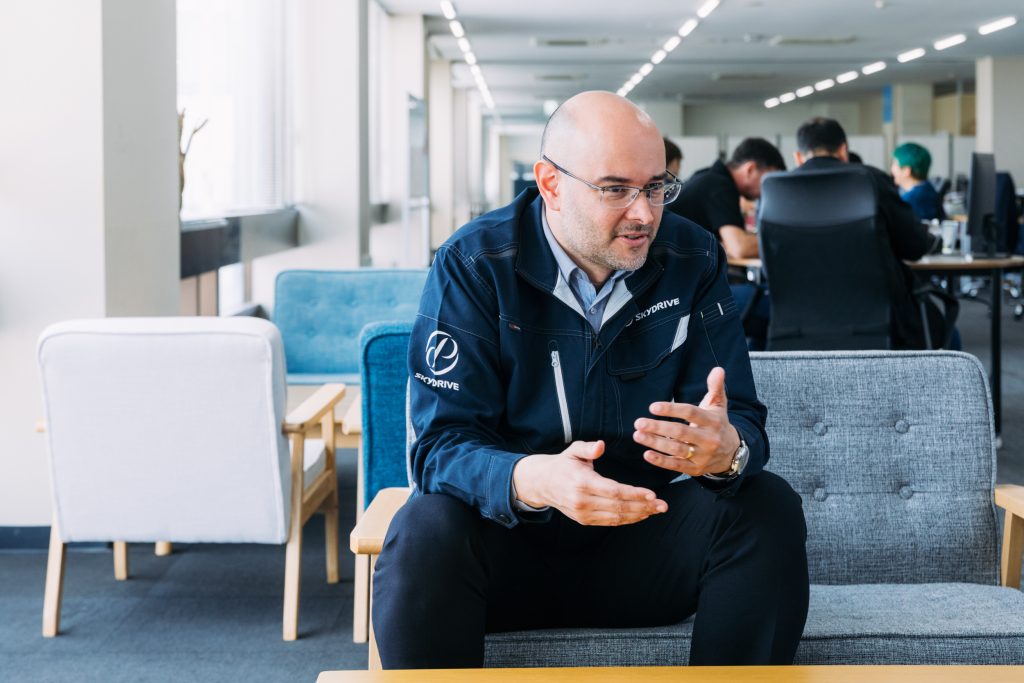
How would you describe your job in one sentence?
My mission is to execute strategies to position SkyDrive at the forefront of the competitive eVTOL market. It’s a continuous effort focused on developing innovative technologies and design solutions to contribute to SkyDrive’s success while also supporting my team’s professional growth.
How do you evaluate the strengths of the multicopter design and the advantages of the SD-05?
From my perspective, the key strength of the multicopter design is its simplicity. Compared with eVTOL concepts that combine fixed-wing and helicopter features—such as tilt-motor aircraft—the multicopter has far fewer moving parts, no tilt mechanisms, and no aerodynamic control surfaces. This simplicity reduces development efforts and certification complexity, while also lowering maintenance costs and operational burden.
The SD-05 benefits directly from this architecture. By avoiding heavy and maintenance-intensive systems such as redundant actuators and complex transition mechanisms, it offers a more efficient platform with an adequate level of design redundancy for safe urban operations. From an operational standpoint, the SD-05 will require less pilot training because its handling is closer to a traditional helicopter, unlike mixed-configuration eVTOLs that require familiarity with both helicopter and fixed-wing flight characteristics.
What kind of social value can the SD-05 create?
We can support urban operations with high efficiency, low environmental impact, and a high level of safety for short-distance missions, all while maintaining an acceptable noise level. Typical use cases include airport shuttles, sightseeing tours, air-taxi services, tourism and business services, patient transport, pet transport, and urban cargo delivery. These routes can be served more efficiently than by car or public transportation, especially in major world cities from NY to Tokyo, including New Delhi, Osaka, and Yokohama, etc where ground traffic is often heavily congested. The multi-rotor configuration is specifically optimized to deliver superior results for daily urban short distance operations, offering lower operating and maintenance costs compared with competing eVTOL solutions while providing safe flight in compliance with certification requirements.
Are there any principles or mottos that guide you in your work?
My personal values, and above all, respect. Leading a multicultural team in a fast-moving eVTOL environment demands that every person — regardless of background or discipline — feels genuinely heard and valued. Respect is not a soft concept here; it is the foundation of how good decisions get made and how a high-performing team actually functions.